AI : The Best Technology You Can’t Turn Off Anymore!
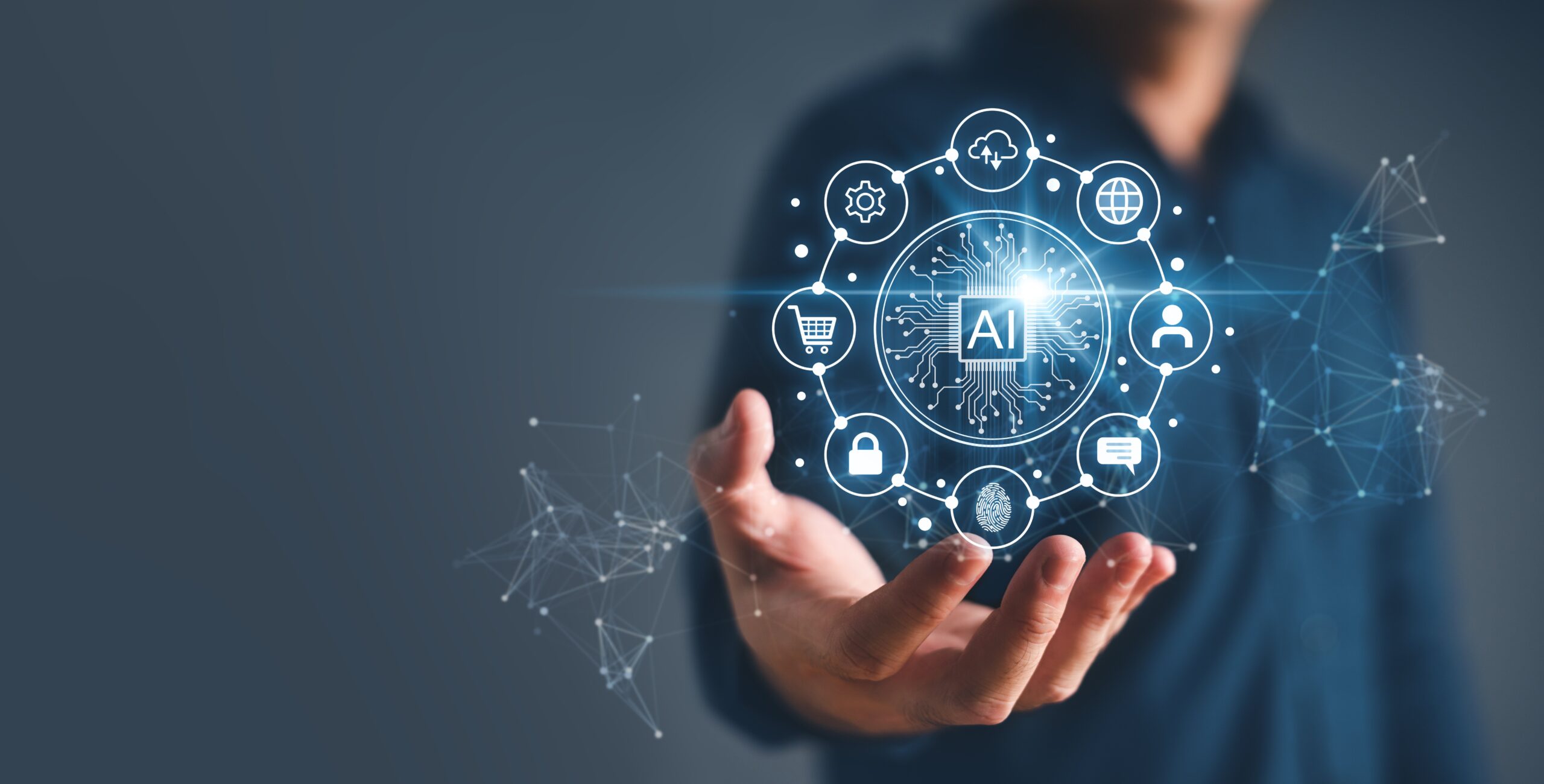
In 2025, Artificial Intelligence isn’t a futuristic fantasy—it’s woven into the fabric of our daily lives. It’s no longer a concept reserved for sci-fi movies or high-tech labs. It’s become an invisible partner in our everyday routines—quietly shaping how we work, learn, travel, shop, and even relax. 9 out of 10 people started interacting with AI -powered tools daily—often without even realizing it—technology has shifted from background support to active companion in modern living. Whether you’re aware of it or not, AI is at the heart of how we live today—and its role is only growing.
AI in Daily Routine(smart assistants, personalized recommendations)
We use Artificial Intelligence in our daily-life for several things . Few examples are using facelocks in phones, using robotic vacuum cleaners, voice assistance, etc…. But still some people thinks Artificial Intelligence is just a fantasay. The detailed listing is given below;
- Smart Assistants: Your Digital Sidekick
Siri, Alexa, Google assistance, etc… are AI-powered voice assistants that are more capable—and more intuitive—than ever before.
How Smart Assistants Use Artificial Intelligence: Natural Language Understanding (NLU): They interpret your voice commands in different tones, accents, and languages.
Context Awareness: AI learns your patterns—so when you say, “Turn on the lights,” it knows which room you’re usually in at that time.
Task Automation: Set daily alarms, schedule calendar events, send messages, or control home appliances—hands-free.
Real-Life Example:
You wake up and say, “Good morning.”
Your assistant: Turns on the bedroom lights gradually, Reads the weather forecast, Plays your preferred news briefing or music playlist, Starts the coffee machine (if connected)
All of this happens because Artificial Intelligence remembers your preferences and understands context, timing, and voice patterns.
- Personalized Recommendations: A Tailored Digital Experience
Personalized recommendations are one of the most widely used applications of Artificial Intelligence—and often, we don’t even notice how much we rely on them.
Where You See It Daily:
Music & Streaming Services (Spotify, YouTube, Netflix)–
AI algorithms track what you watch or listen to and create daily playlists, recommend new songs or shows, and even adjust suggestions based on time of day or mood. Machine learning models analyze millions of users’ behavior to predict what you’ll enjoy next.
E-Commerce Platforms (Amazon, Flipkart, etc….)–
When you browse or buy items, AI tailors your homepage, suggests products frequently bought together, and even reminds you of items you might want to reorder. If you’re a new user, AI compares your actions with similar user profiles to make quick predictions.
News & Reading Apps (Google News, Apple News, etc….)–
AI prioritizes stories that align with your interests, location, and reading history. You get push notifications for topics you frequently read—whether it’s tech, health, politics, or entertainment.
Real-Life Example:
You browse a few smartwatches on Amazon during lunch.
Later, your Instagram feed shows sponsored ads for wearable tech, and YouTube recommends unboxing videos for smartwatches.
This is Artificial Intelligence-driven personalization in action—across platforms.
Artificial Inelligence in Healthcare, Education, and Transportation: Changing Systems, Saving Time
Artificial intelligence isn’t just behind your Netflix suggestions or voice assistant replies anymore. In 2025, it’s working where it truly matters—hospitals, classrooms, and city streets. In 2025, AI is not just optimizing these sectors-it plays a vital role in life-saving diagnoses, personalized learning, and smarter, safer transport systems.
- Healthcare
Healthcare has seen some of the most life-changing Artificial intelligence applications in recent years. Artificial Intelligence is working alongside doctors—not replacing them, but making their jobs faster, more accurate, and more responsive.
Key Applications:
- Faster Diagnoses:
Artificial intelligence systems analyze scans (X-rays, MRIs, CTs) to detect cancers, strokes, and heart conditions within seconds—even before symptoms appear. - Virtual Health Bots:
Chatbots and voice-powered assistants offer 24/7 support to get medication reminders, symptom checks, and even mental health support. - Remote Patient Monitoring:
Chronic illness patients wear smart devices that continuously track vitals, alerting doctors before a crisis occurs. - Robotic Surgery Assistants:
Precision robots, guided by Artificial intelligence, assist surgeons in delicate procedures, reducing recovery time and improving outcomes - Personalized Treatment:
Artificial Intelligence analyzes genetic data, medical history, and lifestyle to recommend treatment plans tailored to the individual.
- Education
Key Applications:
The classroom is no longer confined to four walls. It is reshaping how, where, and what students learn. It transforms education by making learning personalized, scalable, and accessible like never before.
- Smart Tutoring Systems:
Artificial itelligence platforms analyze how a student interacts with content and create custom lesson plans. It’s like having a tutor that never gets tired. - Automated Grading & Assessments:
Teachers save time with AI that grades essays, quizzes, and exams—focusing more on teaching than paperwork. - Learning Analytics:
Schools use Artificial itelligence to track student performance, identify struggling learners early, and recommend personalized resources. - Inclusive Learning:
It’s tools provide real-time language translation, closed captioning, and speech-to-text, breaking barriers for students worldwide and giving every student a seat at the table.
- Transportation
It is driving the transportation sector toward a future that’s safer, faster, and smarter—whether you’re commuting across town or coordinating a logistics fleet.
Key Applications:
- Autonomous Vehicles:
Self-driving cars are no longer prototypes. AI systems power navigation, object detection, and make split-second driving decisions with incredible precision. - Artificial itelligence–Managed Traffic Systems:
Smart cities now use AI to control traffic lights, predict congestion, and reduce commute times by analyzing live data. - Efficient Logistics:
Delivery fleets use AI to optimize delivery routes, fuel usage, and even maintenance schedules—saving money and reducing carbon emissions. - Smart City Transit:
AI helps cities optimize bus routes, monitor crowd flow, and minimize delays using predictive models.
Ethical Concerns and Privacy Risks
Artificial Intelligence has rapidly evolved from futuristic promise to everyday presence—helping us with everything from health monitoring to virtual learning . But it also brings serious ethical questions and privacy concerns that can’t be ignored. As systems become smarter, the lines between convenience, control, and surveillance begin to blur.
- Data Privacy:
Every interaction with AI leaves a trace, whether it’s your heart rate from a wearable device, your voice commands to a smart assistant, or your location from a navigation app, your personal data is constantly being collected, stored, and analyzed.
Concerns:
–Your personal data is being monetized. Most free AI-powered apps and platforms survive by selling or analyzing your behavior for targeted ads.
–You might not know what you’ve agreed to. Long, unreadable privacy policies often mean your data is collected by default.
–You can’t always delete it. Once your data enters a system—especially one powered by AI—it may be copied, backed up, or repurposed permanently.
The real concern? You’re no longer just a user—you’re the product. - Algorithmic Bias:
It’s systems are only as fair as the data they learn from. If that data is biased, incomplete, or historically skewed, the AI’s decisions can mirror those same injustices—sometimes invisibly.
Where this happens:
–Artificial itelligence misdiagnoses patients from underrepresented backgrounds if trained mostly on data from one demographic.
–Artificial itelligence-powered recruitment software may favor candidates who fit a biased profile based on past hiring trends.
– Adaptive learning systems might disadvantage students who don’t fit the algorithm’s assumptions of “success.” - Loss of Human Oversight:
It’s decisions often happen at lightning speed and without clear explanations. This leads to what’s called the “black box” problem—we don’t always know how or why an AI system made a specific decision.
Implications:
–Who’s responsible if an Artificial itelligence-driven car crashes or a medical AI gives incorrect advice?
–Over-reliance on Artificial itelligence could cause professionals to trust machines over their own expertise.
–People affected by Artificial itelligence decisions (like denied insurance or rejected job applications) deserve a clear explanation. - Surveillance and Consent:
It is integrated into smart homes, cities, and public services, it’s increasingly used to monitor behavior in both private and public spaces.
What to consider:
–Are users informed and consenting to being tracked or analyzed?
–Who has access to this surveillance data?
–Could the technology be used for mass surveillance without legal safeguards?
Closing Thoughts:
Artificial Intelligence has moved beyond being just a futuristic idea. It is now a permanent part of our everyday lives. From personalized recommendations to critical healthcare diagnostics and autonomous systems, Artificial itelligence is no longer optional; it is essential. While we can’t “turn it off” anymore, we can choose how to shape its path. The real challenge is not to resist its presence but to ensure that its development is ethical, inclusive, and focused on people. As we enter this Artificial itelligence-driven era, our greatest responsibility is to stay informed, watchful, and proactive. The future of Artificial itelligence isn’t just in the hands of engineers and algorithms; it depends on the values and choices of society as a whole.
Other References
Wikipedia – https://en.wikipedia.org/wiki/Artificial_intelligence
IBM – https://www.ibm.com/think/topics/artificial-intelligence
Google Cloud – https://cloud.google.com/learn/what-is-artificial-intelligence
July 18, 2025 @ 6:56 am
Hi, this is a comment.
To get started with moderating, editing, and deleting comments, please visit the Comments screen in the dashboard.
Commenter avatars come from Gravatar.
February 13, 2026 @ 1:45 am
I have been browsing online more than 3 hours today, yet
I never found any interesting article like yours. It’s pretty worth enough for me.
Personally, if all webmasters and bloggers made good content as you did,
the net will be much more useful than ever before.
February 14, 2026 @ 5:03 am
Thank you.